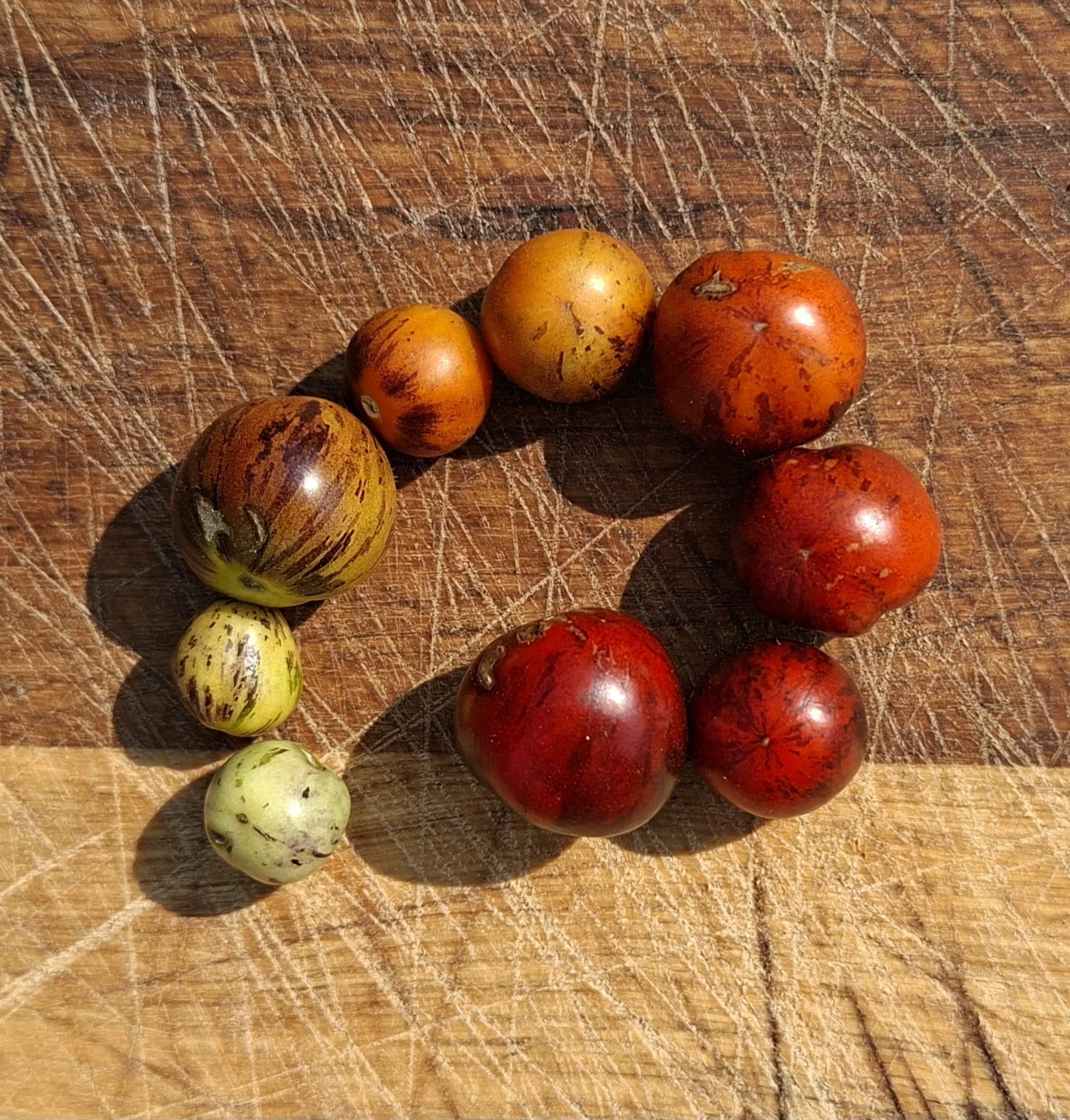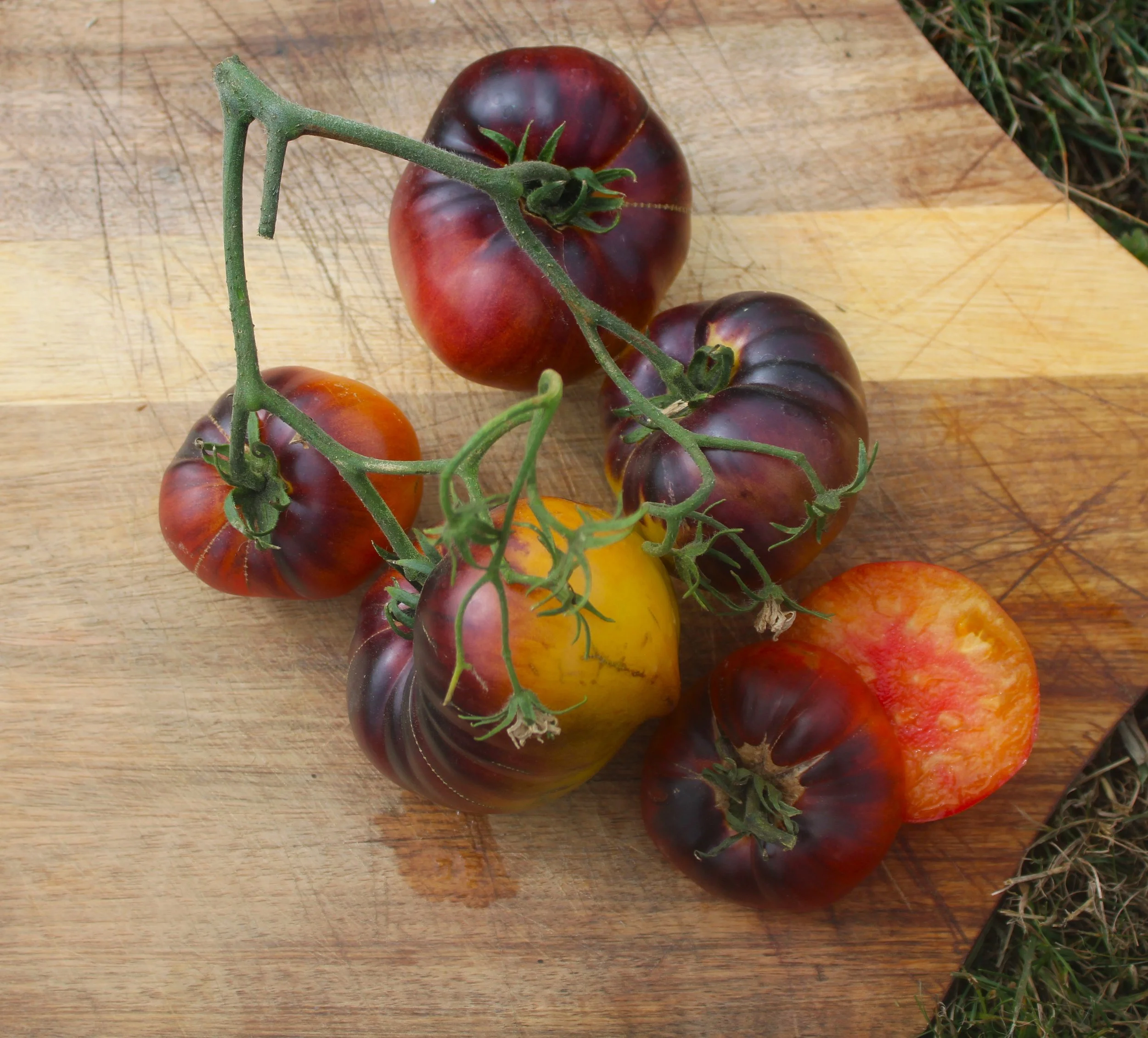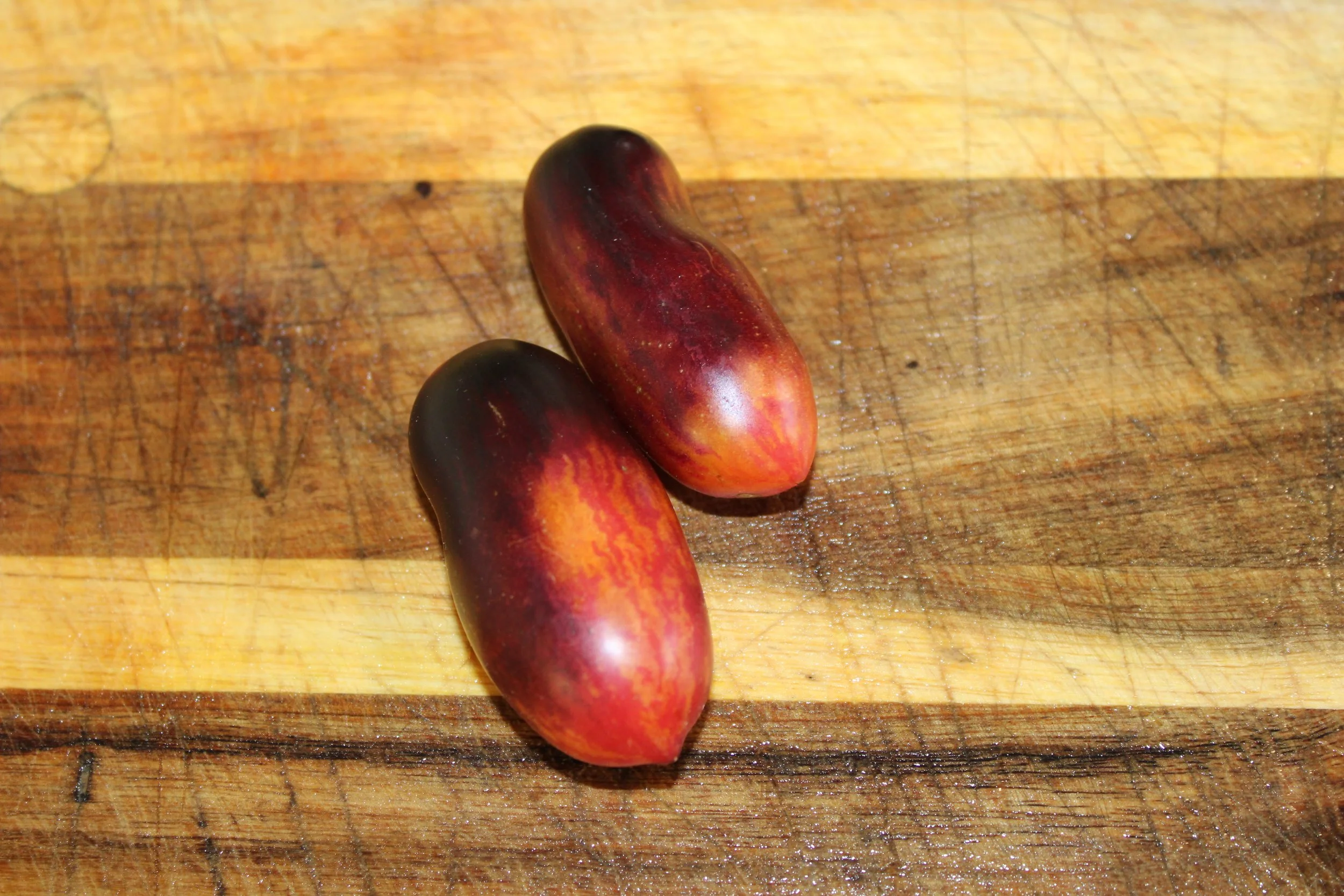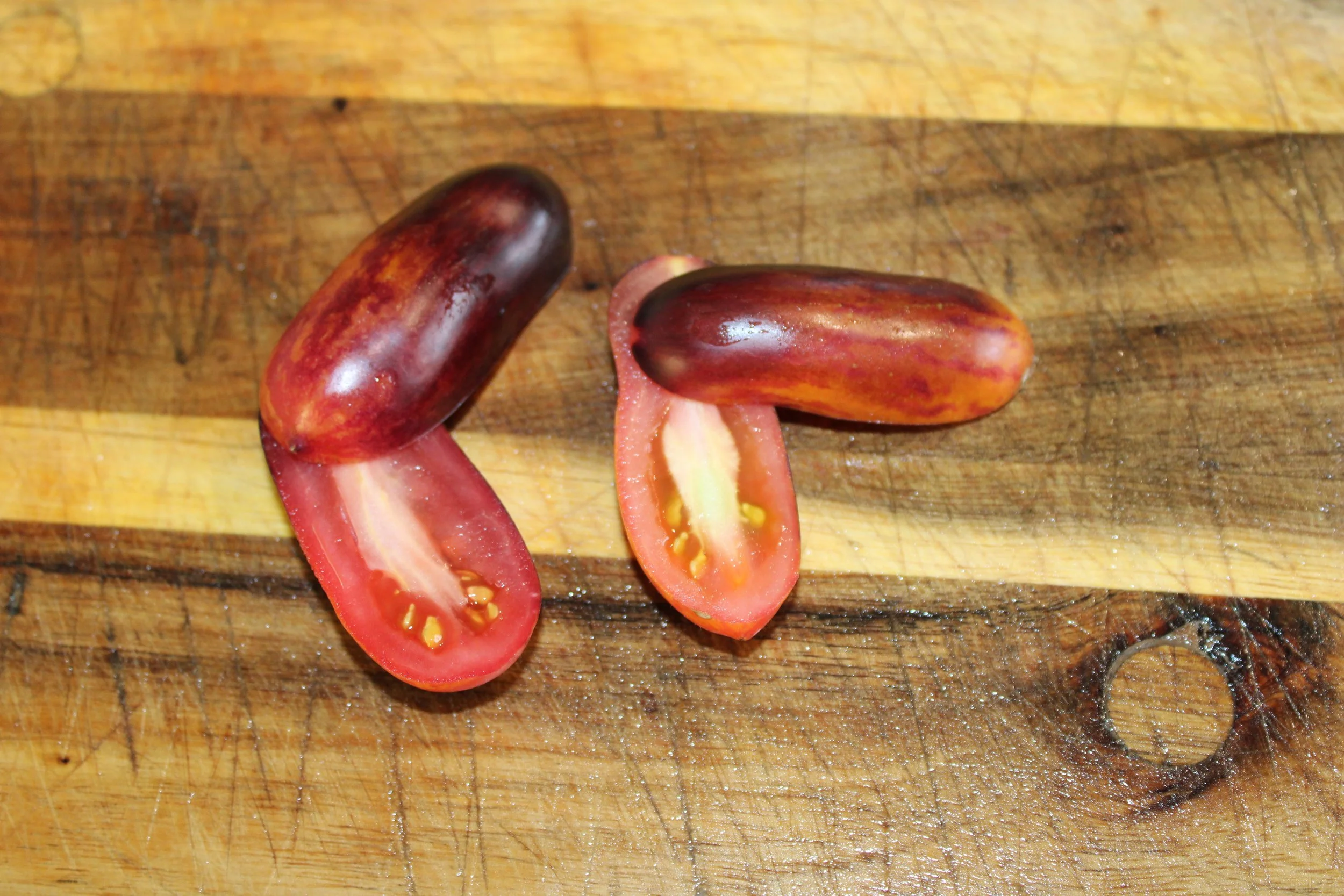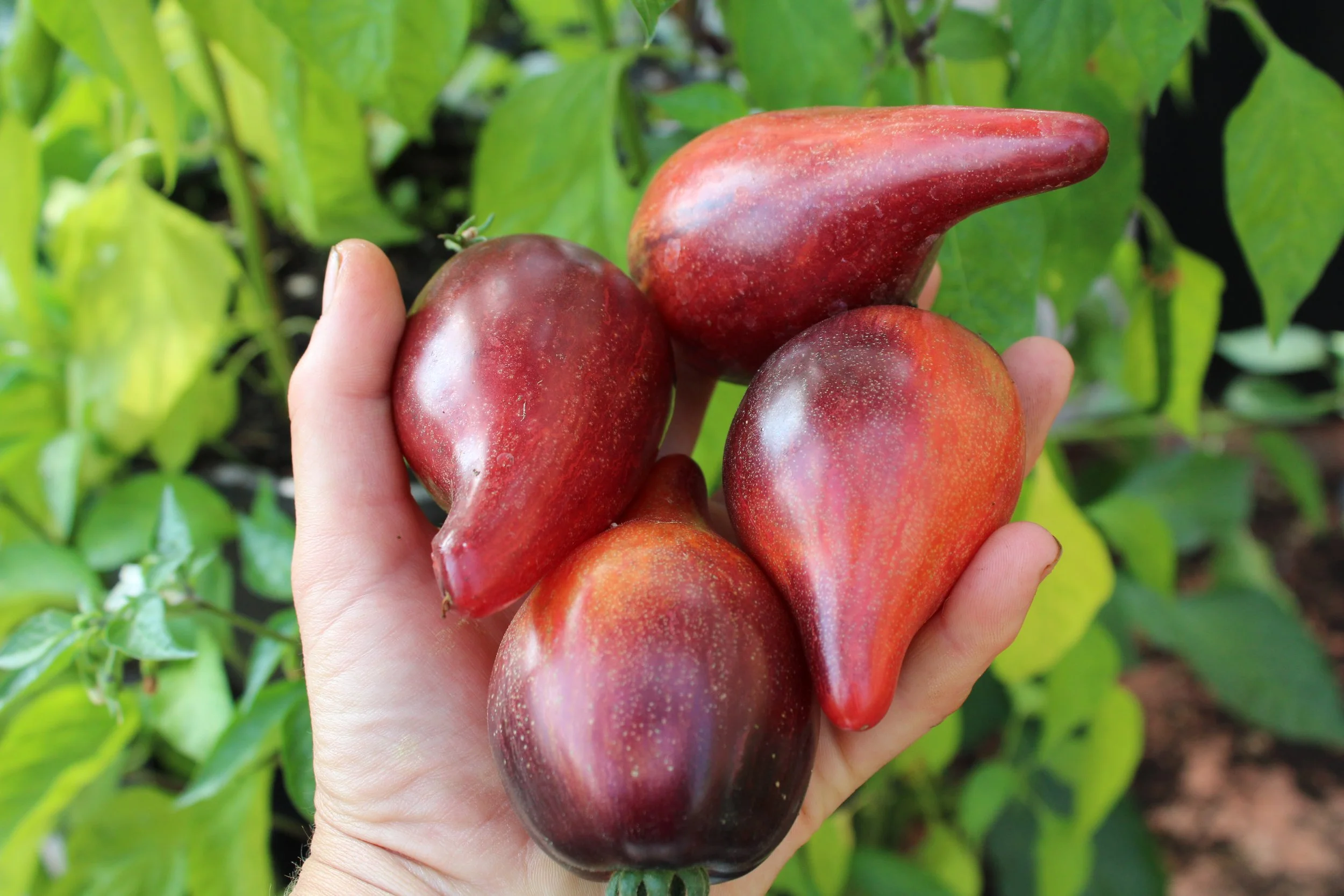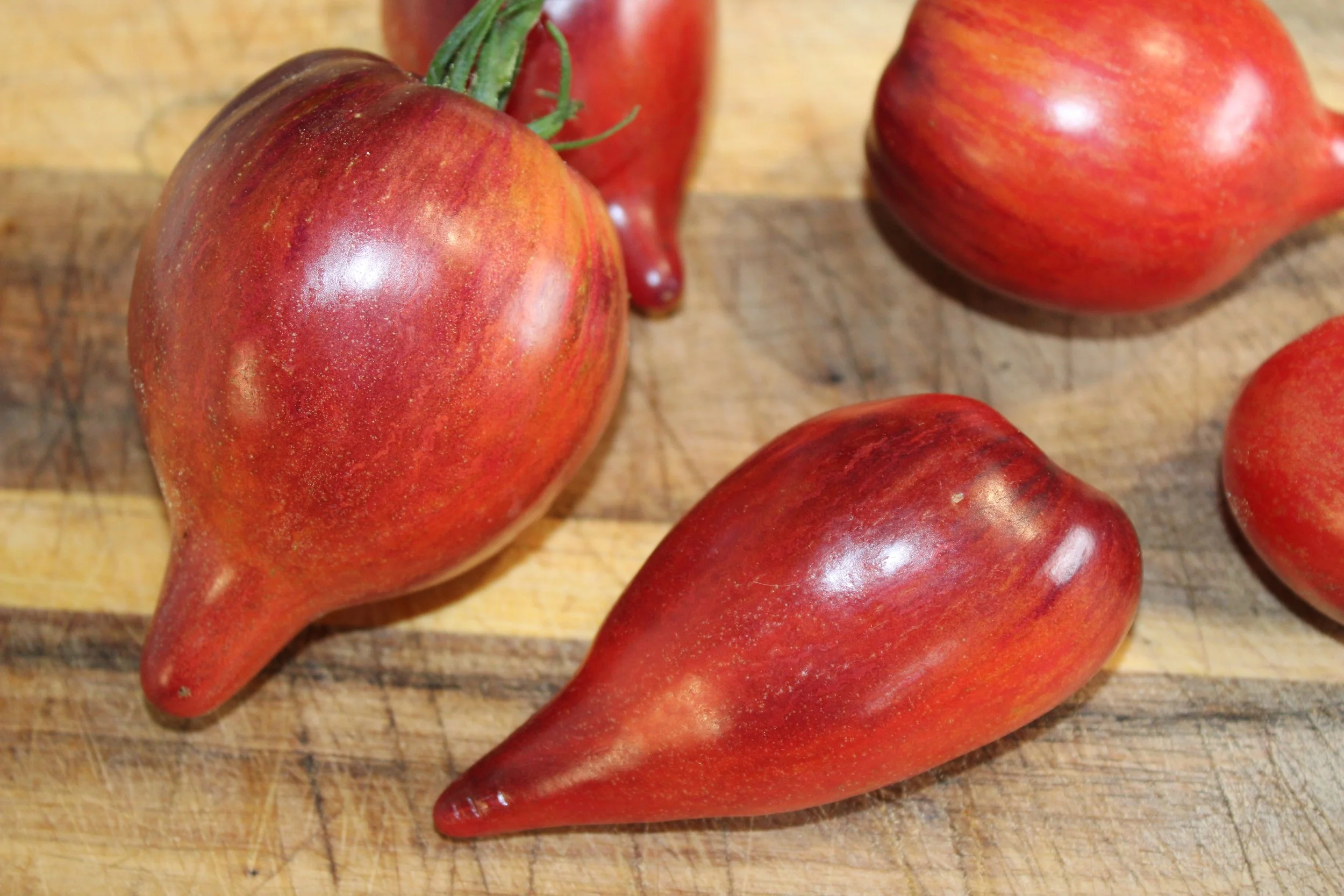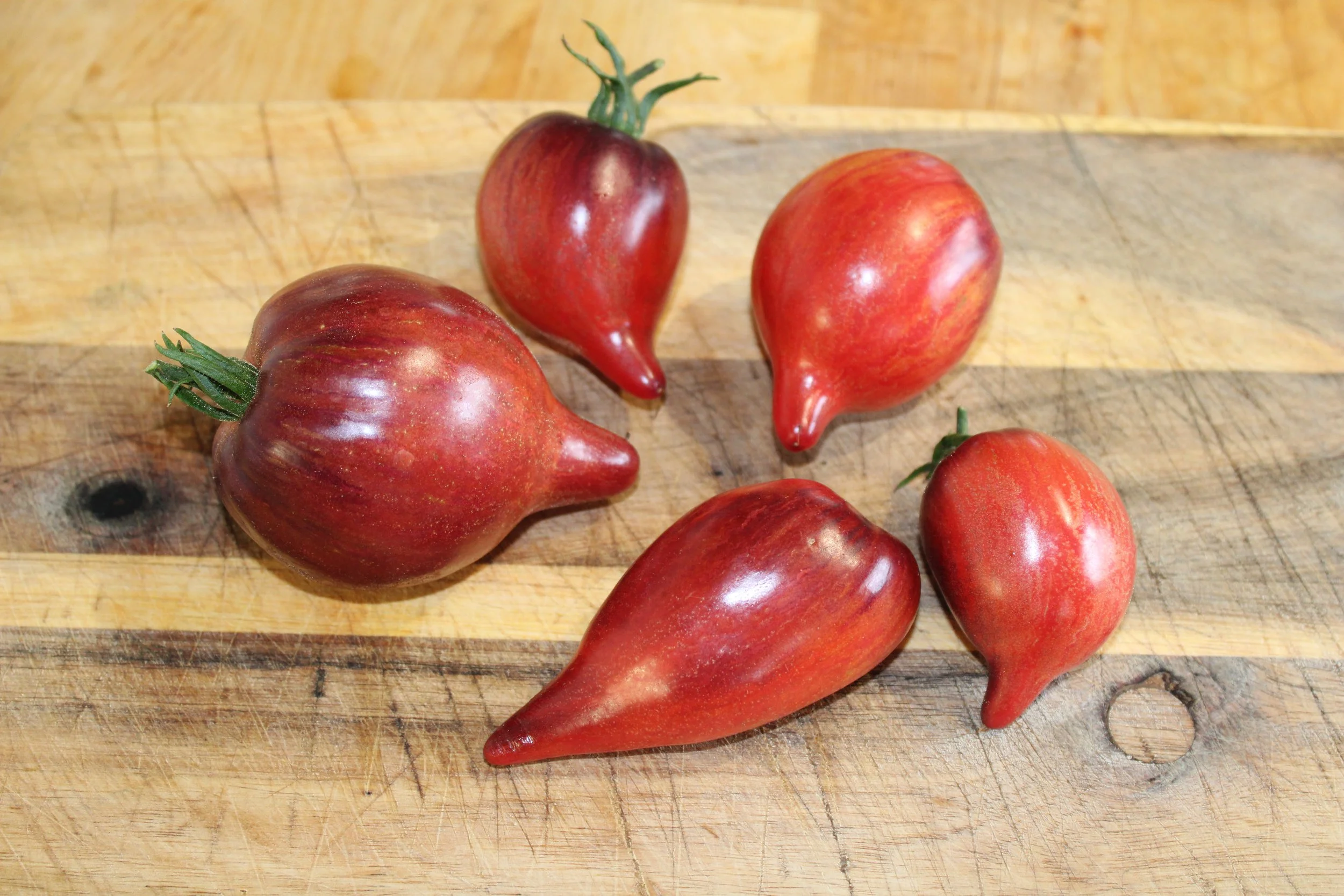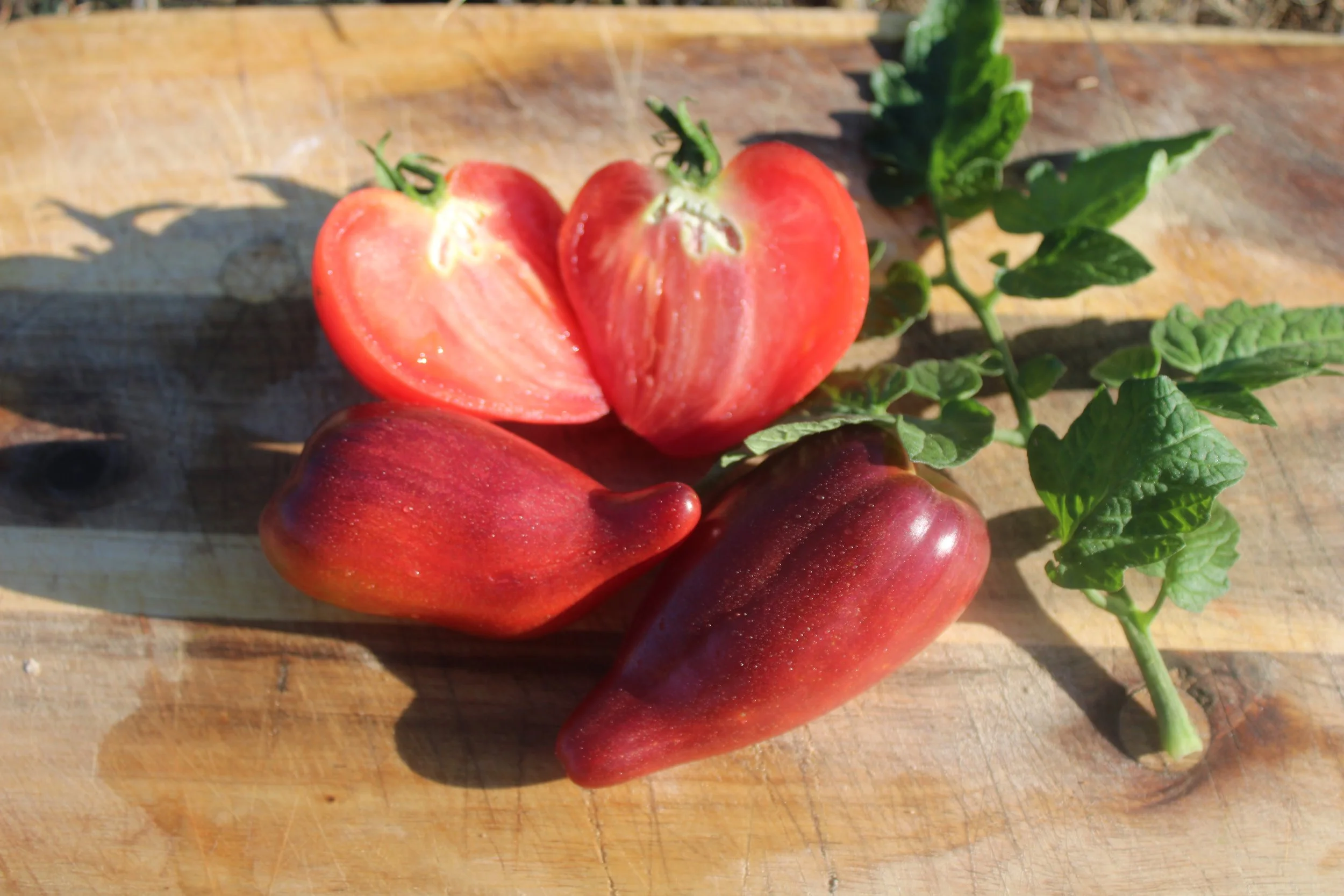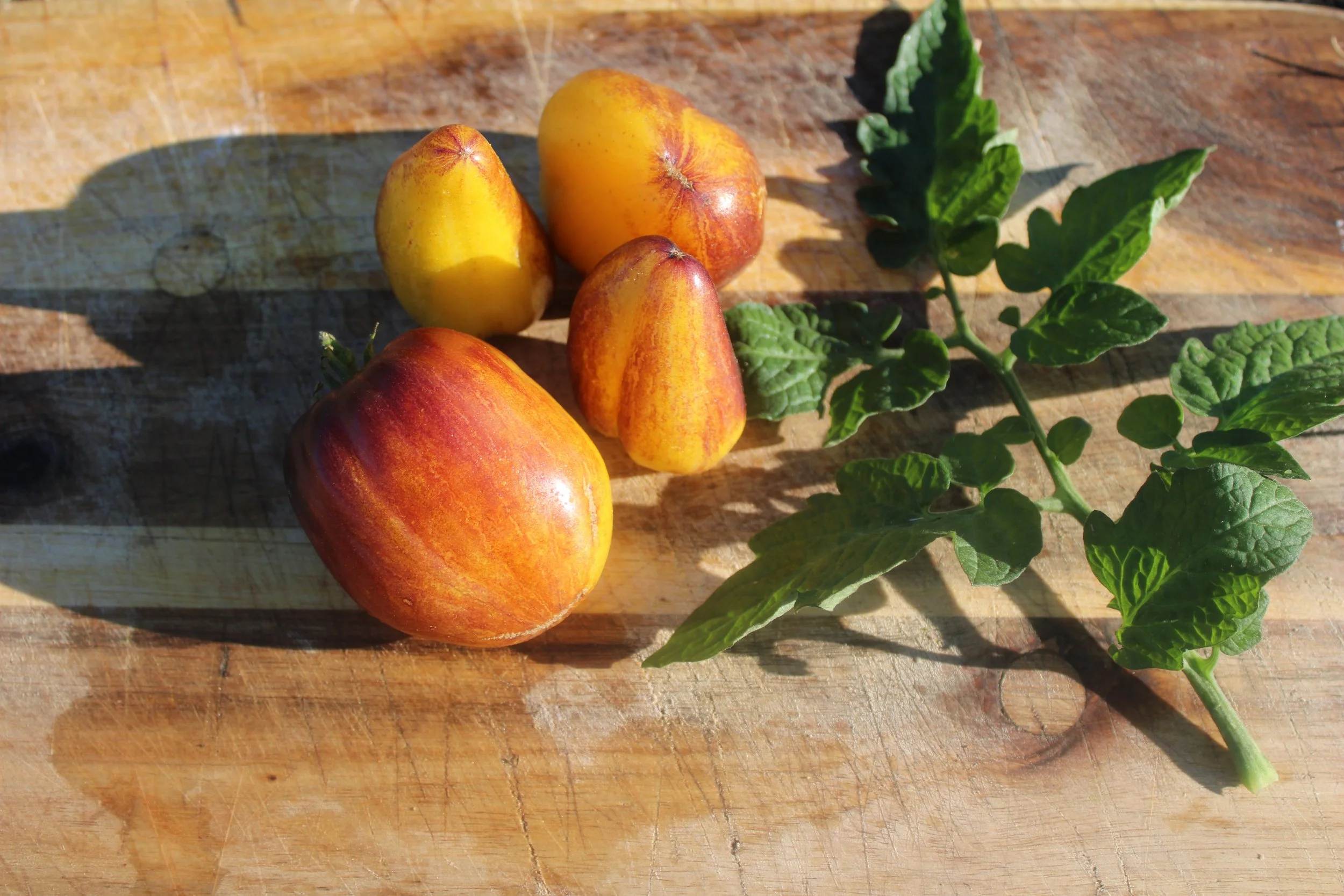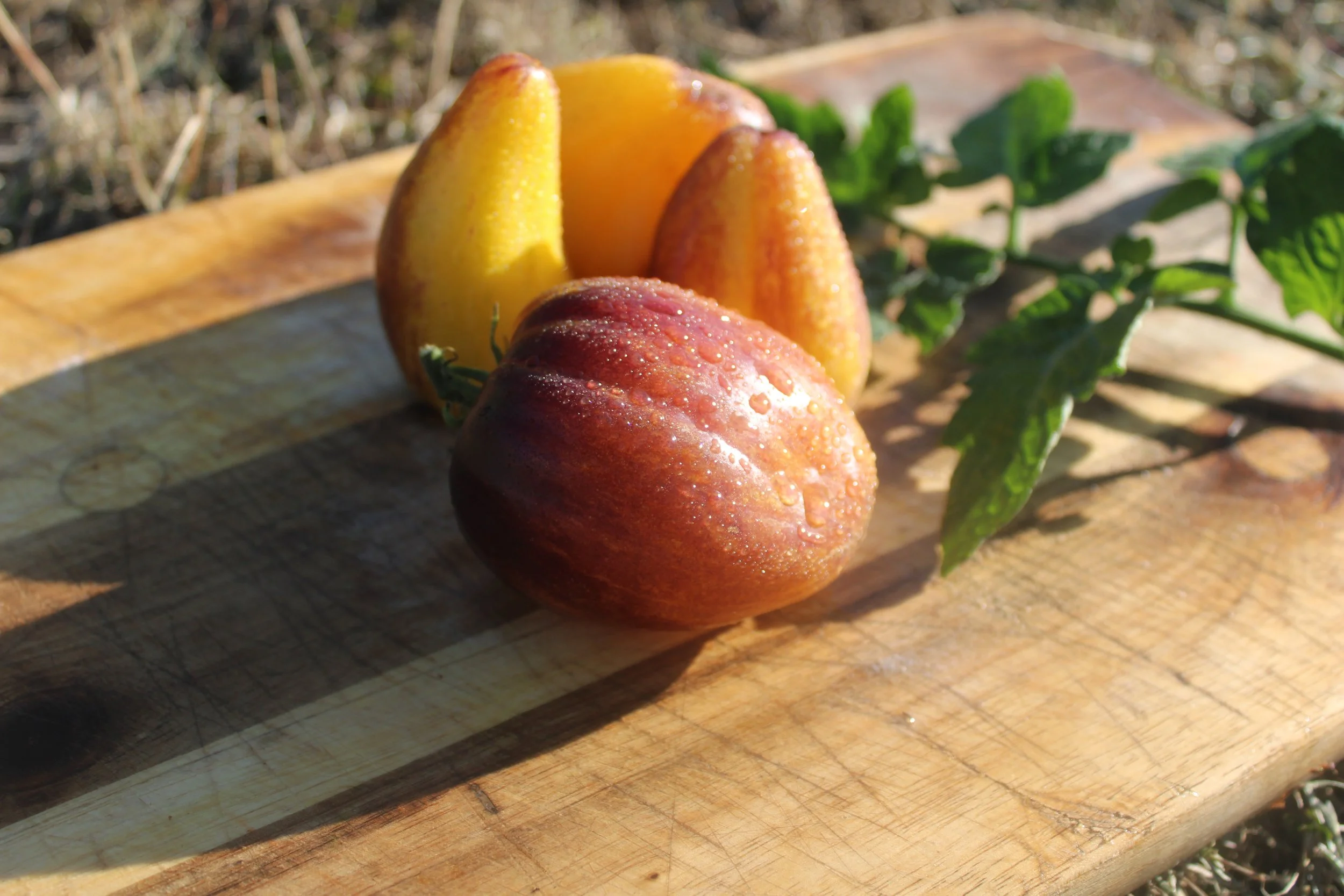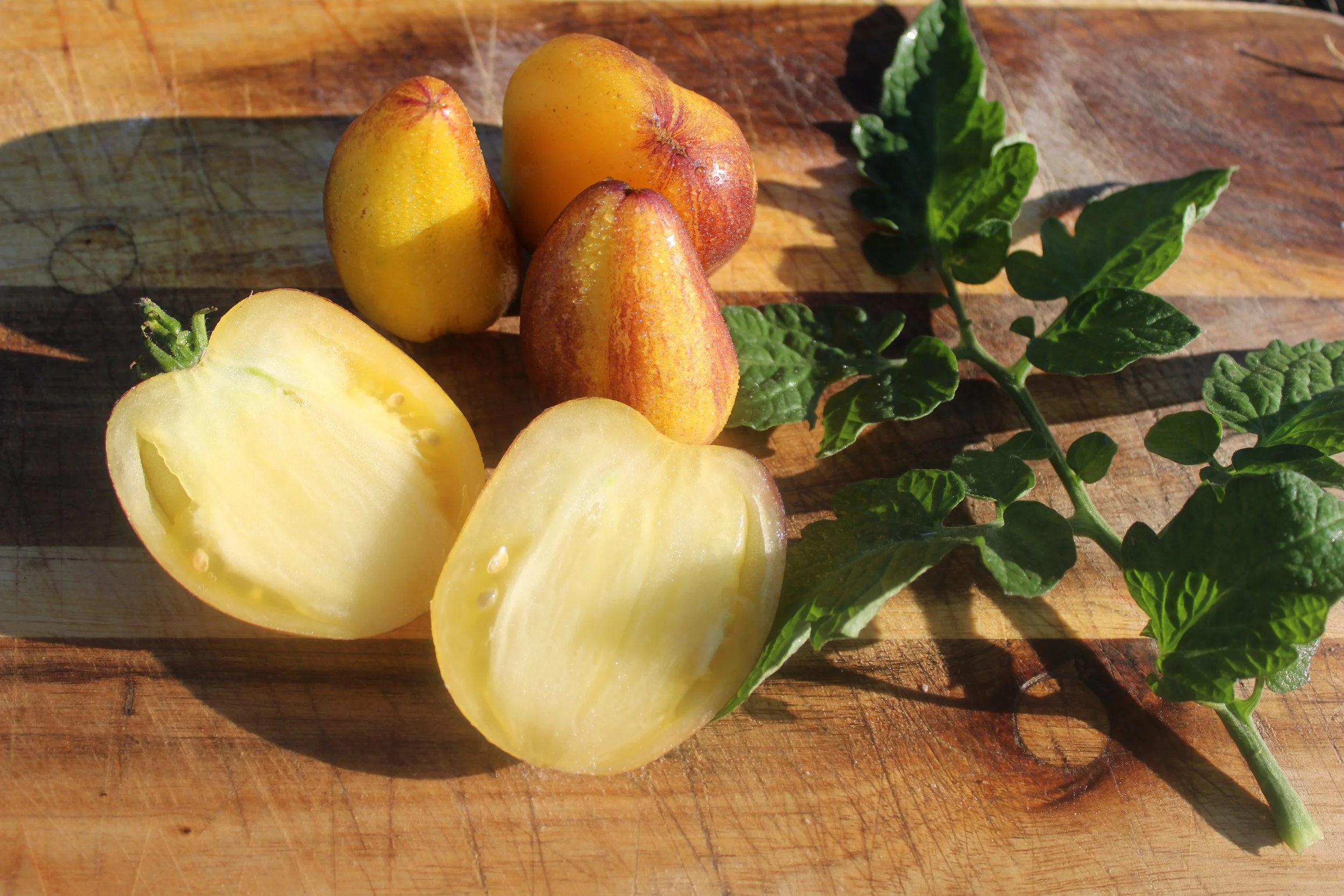
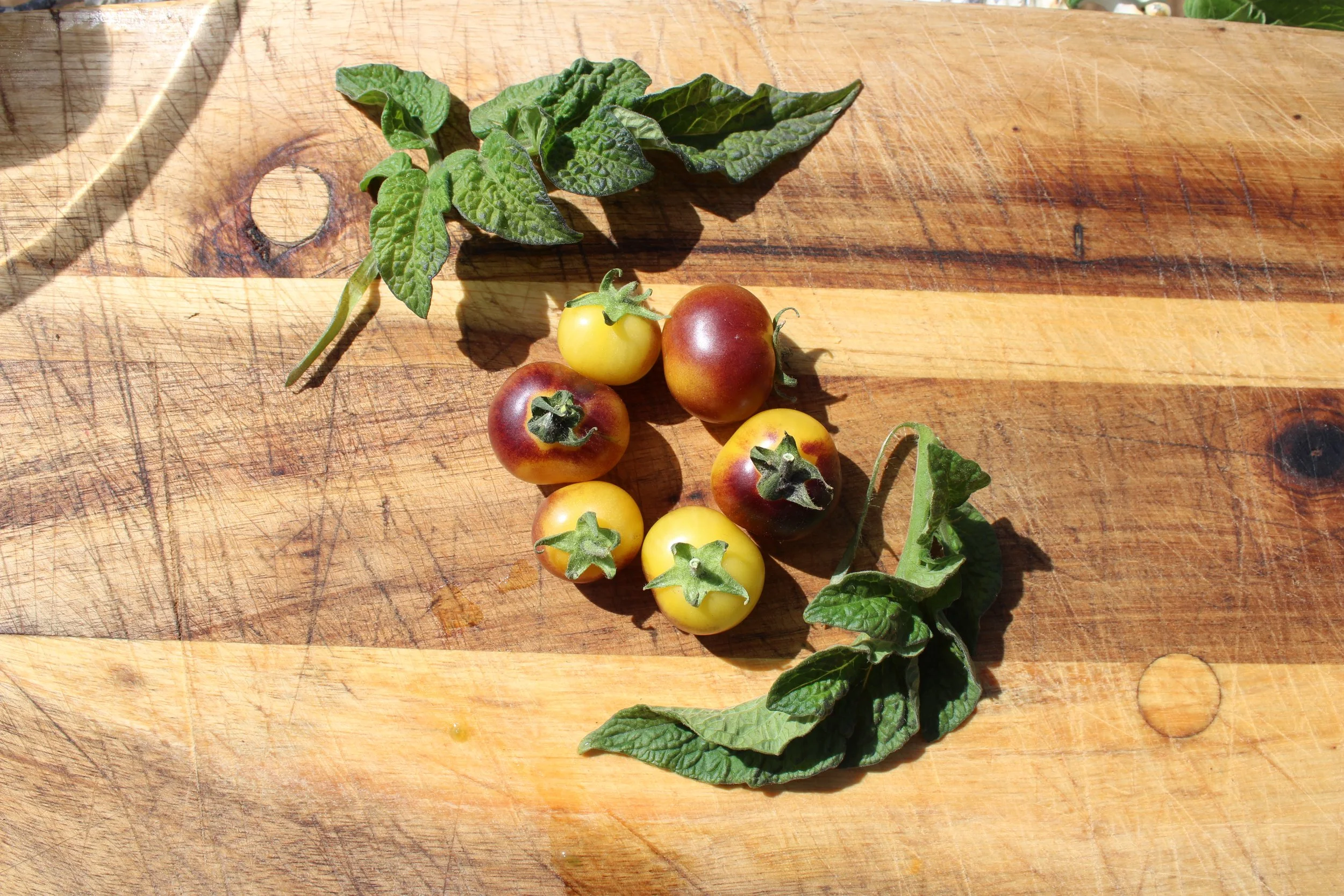
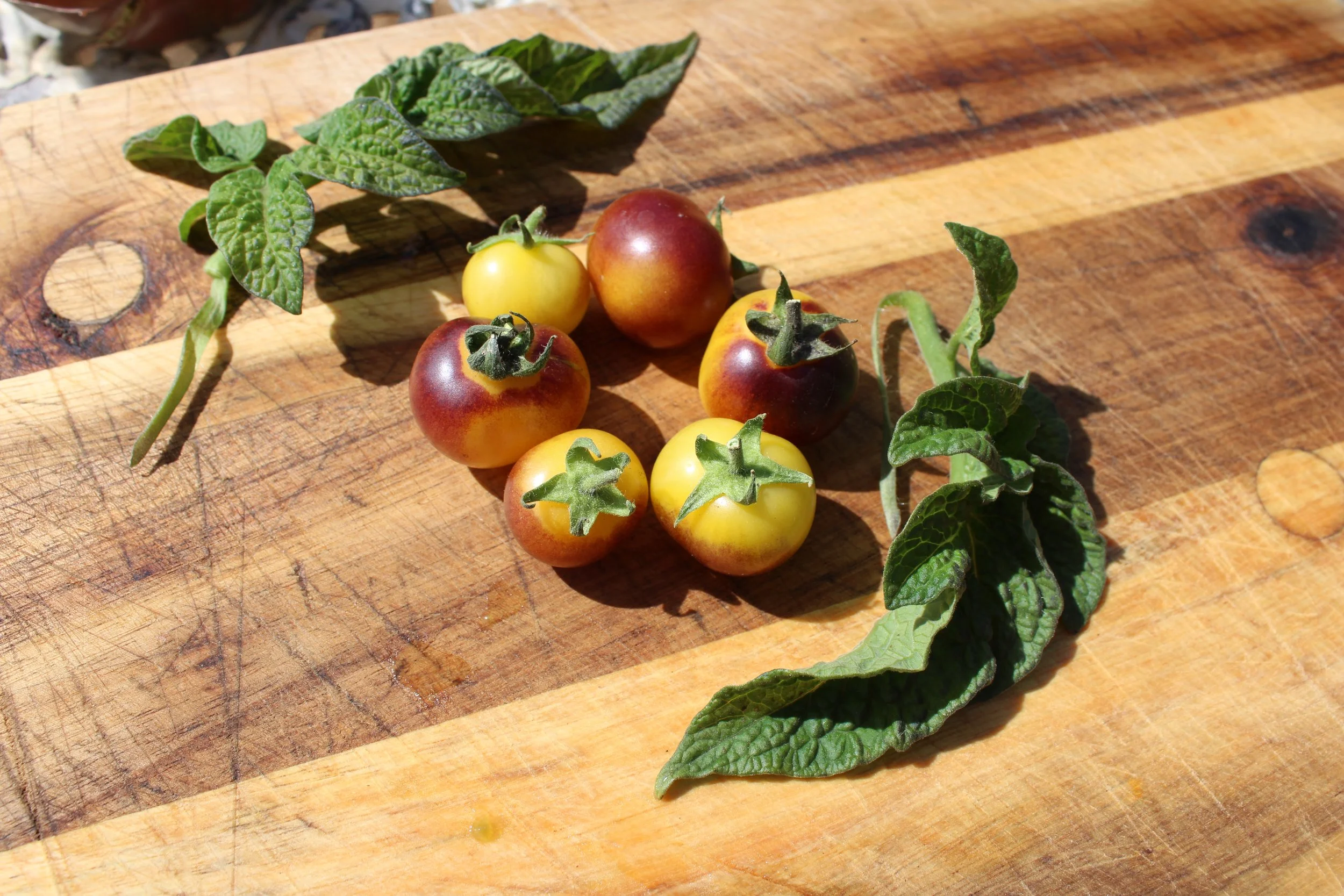
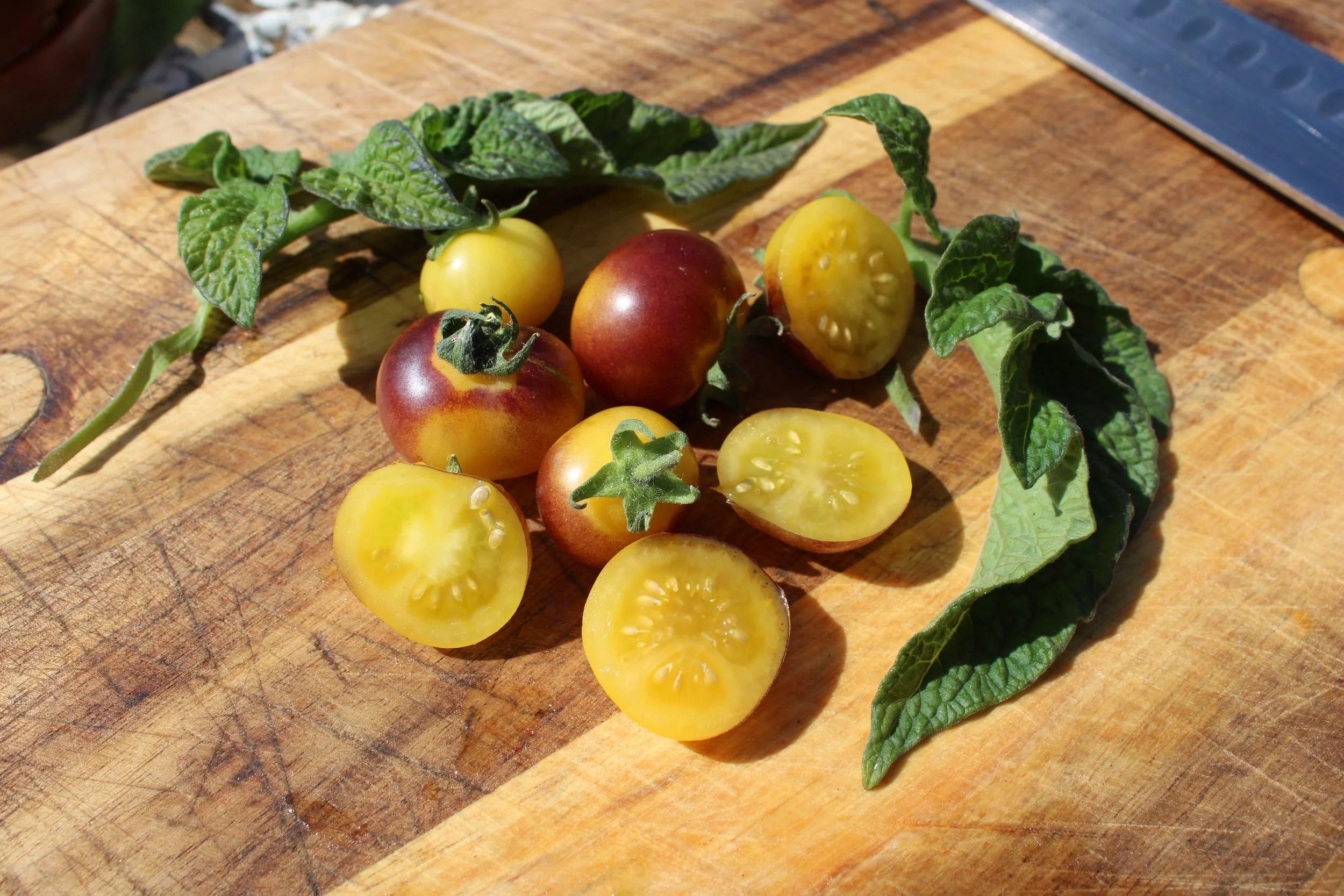
An early maturing, dwarf plant with rugose potato leaves and a really gorgeous, compact way of setting the fruit, which hang in tight clusters of 6 or 7, looking like bunches of grapes. The plants are sturdy, tight and tidy, and need very little support. Developed by Bill Yoder, these plants will grow to around 70cm and produce masses of 15g, yellow cherries with anthocyanin shoulders. Despite being heavily coloured with anthocyanin, they retain only a very small amount of antho flavouring. Delicious and sweet with plenty of balanced acidity. A real winner for a pot or raised bed.
Dwarf, 70cm, rugose potato leaf, early maturing and heavy cropping.
Dwarf plants are a great addition to any garden, being perfect for large pots (12lt plus) and edges of beds. They possess a gene which causes their growth pattern to be condensed, meaning that the stems are sturdier, and the leaf nodes are closer together. This means that they are brilliant for growing outdoors, and can withstand wind and weather better than regular indeterminates. Also, a dwarf plant can produce as much fruit as a regular indeterminate, but in a much smaller space. Like regular sized plants, dwarfs come in determinate (bush types which set all their fruit at once) and indeterminate (vining) types.
Sow Jan-April indoors
10-15 open-pollinated seeds
An early maturing, dwarf plant with rugose potato leaves and a really gorgeous, compact way of setting the fruit, which hang in tight clusters of 6 or 7, looking like bunches of grapes. The plants are sturdy, tight and tidy, and need very little support. Developed by Bill Yoder, these plants will grow to around 70cm and produce masses of 15g, yellow cherries with anthocyanin shoulders. Despite being heavily coloured with anthocyanin, they retain only a very small amount of antho flavouring. Delicious and sweet with plenty of balanced acidity. A real winner for a pot or raised bed.
Dwarf, 70cm, rugose potato leaf, early maturing and heavy cropping.
Dwarf plants are a great addition to any garden, being perfect for large pots (12lt plus) and edges of beds. They possess a gene which causes their growth pattern to be condensed, meaning that the stems are sturdier, and the leaf nodes are closer together. This means that they are brilliant for growing outdoors, and can withstand wind and weather better than regular indeterminates. Also, a dwarf plant can produce as much fruit as a regular indeterminate, but in a much smaller space. Like regular sized plants, dwarfs come in determinate (bush types which set all their fruit at once) and indeterminate (vining) types.
Sow Jan-April indoors
10-15 open-pollinated seeds